

Biosite’s logistics team no longer spends mornings chasing paper records or guessing whether a sample shipment stayed in range overnight.
Today, every vehicle in their fleet broadcasts live temperature data to a single compliance platform, couriers can see excursion alerts the moment they happen, and audit-ready reports are generated automatically — no spreadsheet required.
That operational transformation, across ten sites and a complex outsourced collection network in Maine-et-Loire, was delivered by JRI MySirius Mobility. It is the same outcome available to any pharmacy, clinical laboratory, or healthcare logistics operation that is still managing cold chain compliance the hard way.
The Essential Compliance Platform for Highly Regulated Environments
Before adopting MySirius, Biosite relied on a vehicle fleet management tool that fell short on the compliance side.
As Mr. Lancelin, Logistics and Metrology Manager at Biosite, explained directly: the system’s metrological capability was limited and data archiving was far from straightforward.
That gap matters enormously in a regulated medical analysis environment. Samples in transit must meet temperature conditions tied to specimen integrity and patient safety. A missed excursion that goes unrecorded is not just an operational failure — it is a compliance liability.
The challenge Biosite faced is not unique.
Across pharmacy, laboratory, and healthcare logistics settings, organisations managing temperature-sensitive assets routinely operate across fragmented systems:
- one tool for monitoring
- another for calibration records
- a manual process for mapping
- and a shared drive full of PDF reports that no inspector can efficiently navigate
JRI MySirius was built to collapse all of that into a single validated platform — purpose-built for environments where regulatory evidence is not optional.


Built-In Metrology and Calibration Management: Eliminate the Compliance Gap Between Your Sensors and Your Records
Most temperature monitoring platforms stop at the sensor. JRI MySirius goes further with an integrated metrology module that manages the entire measurement chain — from sensor calibration through drift analysis, adjustment modeling, and certificate generation — inside the same interface used for daily monitoring.
MySirius includes a dedicated Metrology module that supports full calibration workflows: multi-stage programs, CE and CV report generation with modeling, self-calibration for LoRa-connected devices, and drift analysis across calibration events.
When a sensor is calibrated, adjusted, and recommissioned, the complete audit record is attached to that measurement chain automatically. There is no manual transfer of data between a separate calibration system and the monitoring platform — the two are the same system.
This matters in practice for labs and pharmacies operating under USP 797, USP 800, CLIA, or CAP requirements, where measurement traceability is expected documentation during any accreditation audit.
JRI holds COFRAC accreditation for temperature calibration (certificate N° 2-1943) and for the temperature mapping of thermostatic chambers (certificate N° 1-2471), meaning the calibration services underpinning MySirius operate under an internationally recognised, A2LA-equivalent quality framework. For organisations building their own quality management system, that accreditation transfers directly into your compliance documentation.
Validated Cloud and On-Premises Deployment: Choose the Infrastructure That Fits Your IT Policy
Regulated environments do not all have the same IT architecture — and compliance requirements should never force an organisation into an infrastructure it cannot support.
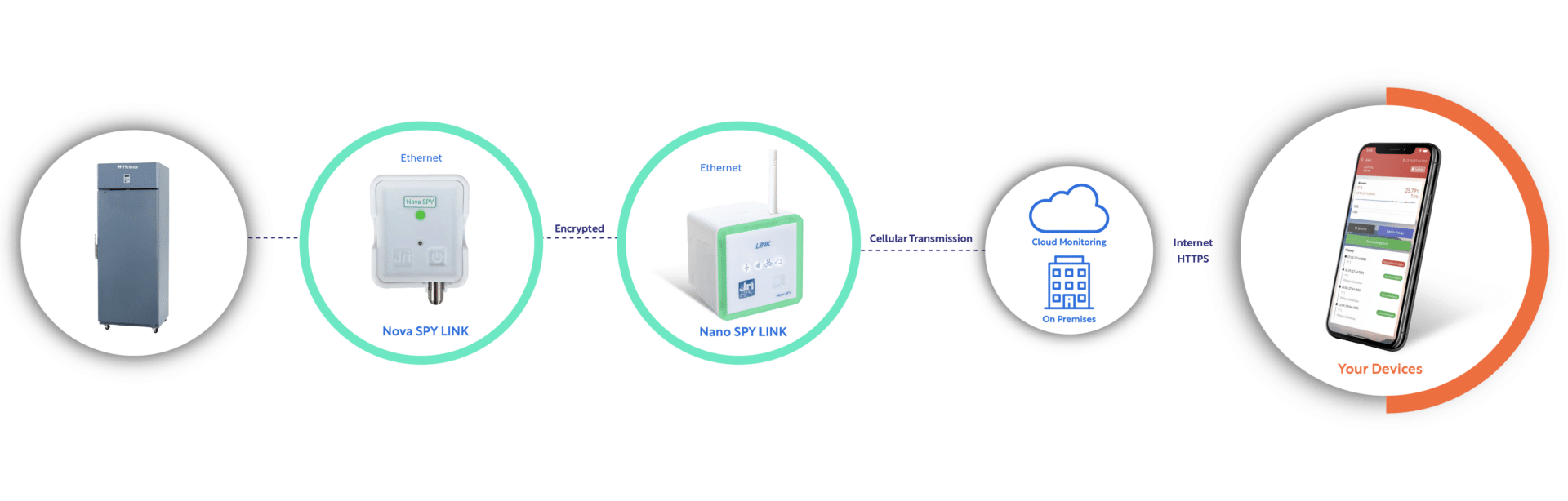
JRI MySirius is available as both a cloud-hosted solution and a server-deployed (on-premises) installation, with full qualification and validation reports published for each deployment model.
Each MySirius version release is accompanied by a Qualification and Validation Report (the VALID series) covering technical tests, non-regression testing, validation testing, and explicit 21 CFR Part 11 compliance confirmation.
These reports are available to customers and can be incorporated directly into your site’s Computer System Validation documentation — a requirement under FDA 21 CFR Part 11, EU GMP Annex 11, and ICH Q10.
The cloud deployment is ideal for multi-site organisations like Biosite that need consolidated visibility across dispersed locations without managing on-site server infrastructure.
The on-premises server deployment suits facilities with strict data sovereignty requirements or limited external network access. In both cases, the platform delivers a full audit trail, role-based access controls, electronic signatures, and tamper-evident data records — the specific technical controls that 21 CFR Part 11 and EU GMP Annex 11 require of any computerised system handling regulated data.

Our customer testimonials

Pharmacist Biologist
How Biosite revolutionised its cold chain monitoring with JRI MySirius Mobility
Transporting biological samples is a race against time, where every degree counts. For Biosite, a medical analysis laboratory located in the heart of Maine-et-Loire, this reality had become a constant challenge. Discover how adopting JRI’s MySirius Mobility solution transformed their operations, simplifying temperature management and strengthening traceability.
Supervisor of the 6 restaurants of the Belfort / Montbéliard franchise
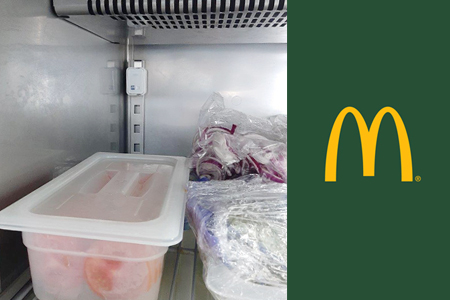
How McDonald’s France is deploying IoT to monitor the cold chain in its kitchens
From a project initially conducted to monitor cold rooms in McDonald’s France restaurants
JRI’s cold chain monitoring solutions have been rolled out to refrigerated and frozen units in the kitchens of several hundred restaurants in France.
Director of the Health/Beauty Market Line – Heppner
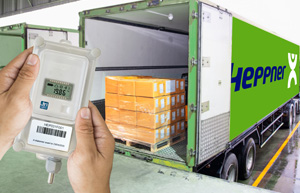
The monitored temperature solution for health and beauty products deployed throughout the Heppner network
“This new offering meets our customers’ requirements in terms of traceability, transparency, and complete end-to-end control of their supply chain.”
In-Transit Cold Chain Monitoring: Real-Time Temperature Visibility That Moves With Your Product
Cold chain compliance does not end at the loading dock. For Biosite, the gap was precisely in transit — samples collected by private nurses and transported across Maine-et-Loire by courier vehicles to two centralised platforms. Without live visibility into those vehicles, temperature management was reactive at best.
The MySirius Mobility module addresses this directly.
Biosite equipped six vehicles with Nano SPY sensors, providing continuous, precise temperature monitoring throughout every journey.
In-cab displays gave couriers real-time visibility into transport conditions, shifting temperature responsibility from a back-office review process to an active driver behaviour.
Data from all vehicles is centralised on the MySirius platform, giving the metrology manager a single view across the entire sample logistics operation.
For healthcare and pharmaceutical organisations operating any form of cold chain logistics — whether internal distribution vehicles, third-party courier networks, or clinical trial sample transport — the Liberty SPY range extends this capability using LTE-M and NB-IoT cellular connectivity, purpose-built for fixed installations or in-transit monitoring where LoRaWAN infrastructure is unavailable.
Every data point recorded in transit is timestamped, archived, and available for regulatory review. The cascade alert architecture ensures that the right person receives notification at the right escalation level the moment a threshold is breached — not after the shipment arrives and someone checks a report.
Temperature Mapping for Thermostatic Chambers, Cold Rooms, and Storage Environments
Knowing that a storage unit is operating does not tell you whether every part of that unit is operating within specification.
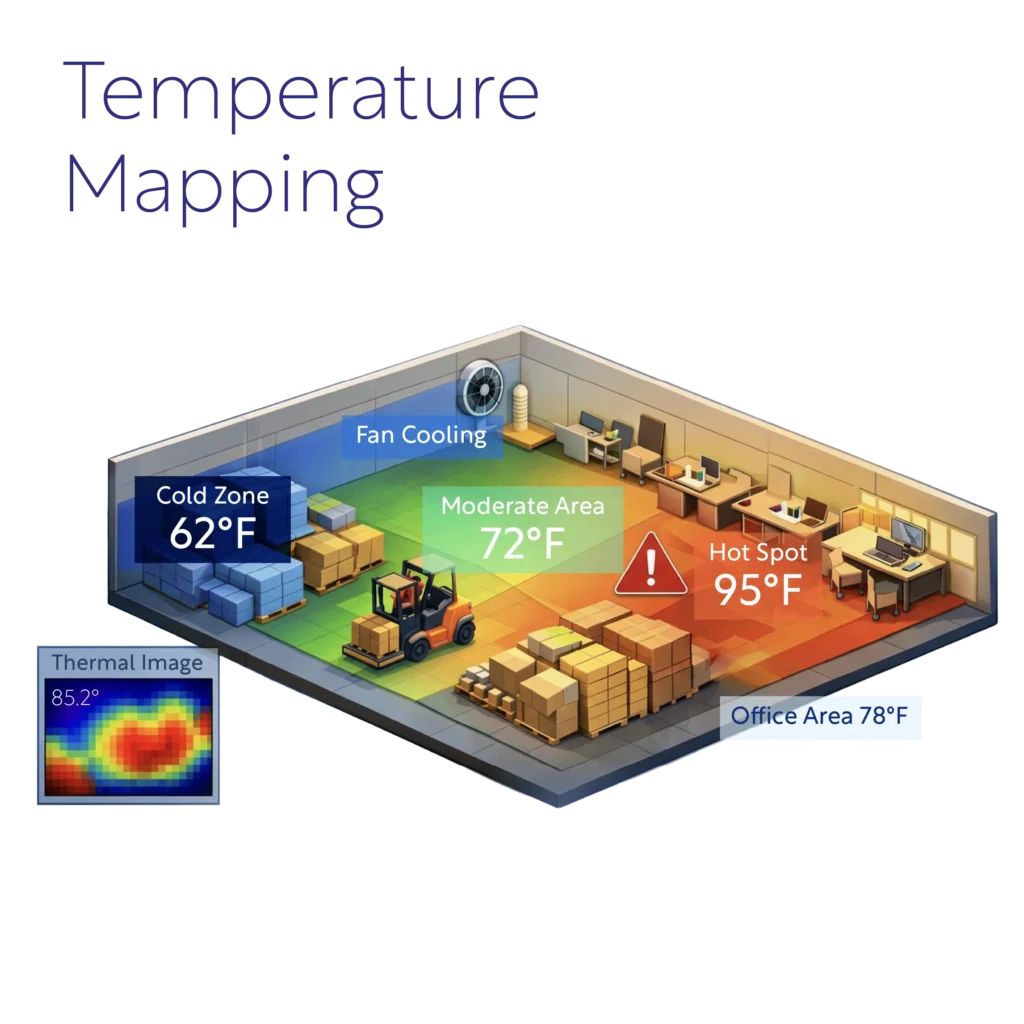
Temperature mapping — the spatial characterisation of thermal uniformity across a storage environment — is a regulatory expectation under USP 1079, EU GDP guidelines, and good distribution practice standards for pharmaceutical storage.
It is also one of the most administratively burdensome compliance activities most labs and pharmacies manage.
JRI’s COFRAC accreditation for temperature mapping of thermostatic chambers (N° 1-2471) means that mapping studies performed using MySirius-connected metrological tools are backed by an accredited laboratory framework.
The MySirius platform manages the mapping workflow — defining measurement points, recording spatial data across stabilisation periods, identifying hot and cold spots, and generating the mapping report as a validated document within the same system used for ongoing monitoring.
When a chamber is recommissioned after maintenance or a significant ambient temperature change, the mapping record is immediately available without reconstructing it from a separate file system.
Regulatory Compliance Across Lab, Pharmacy, and Healthcare: What MySirius Covers
The question most compliance managers ask before any platform decision is straightforward: does this system actually satisfy the specific standards my facility is audited against? For JRI MySirius, the answer is documented rather than asserted.
Each VALID series qualification report formally references compliance against:
- FDA 21 CFR Part 11 (electronic records and signatures),
- 21 CFR Parts 58, 210, and 211 (GLP and cGMP for finished pharmaceuticals),
- 21 CFR Part 820 (quality system regulation for medical devices),
- EU GMP Annex 11 (computerised systems), EudraLex Volume 4, ICH Q7 through Q10,
- and PIC/S PI 011-3 (good practices for computerised systems in regulated GxP environments)
The platform’s NF EN 12830 certification covers LoRaSPY and NanoSPY data loggers specifically — the hardware standard for instruments used in temperature monitoring of foodstuffs and medicinal products.
For US-based pharmacy and laboratory operations, this means MySirius arrives with documentation already structured to support USP 797 and USP 800 environmental monitoring requirements, CLIA laboratory quality system expectations, and CAP accreditation audit preparation.
The platform’s full audit trail, role-based access, and validated reporting features map directly to the technical controls these standards require of any monitoring system generating compliance-relevant data.
From Operational Simplification to Audit Readiness: The Biosite Outcome
Mr. Lancelin described the change simply: MySirius consolidates temperature data across the entire operation onto a single platform, and that simplification makes his management substantially easier.
The couriers now take ownership of temperature conditions in transit. The metrology records are centralised and accessible.
The compliance documentation that used to require manual assembly is now generated by the platform.
That outcome — less operational friction, stronger regulatory evidence, and measurable improvement in team accountability for temperature-sensitive assets — is what a purpose-built compliance monitoring platform should deliver.
JRI MySirius is designed from the ground up for exactly the environments where getting it wrong is not an option: medical analysis laboratories, pharmaceutical storage, hospital pharmacies, cleanroom environments, and healthcare cold chain logistics.
If your organisation is still managing environmental monitoring, calibration records, and transit data across separate systems, the question is not whether to consolidate — it is how quickly you can do it without creating a validation gap in the process.
MySirius addresses both.
Need to talk to a JRI expert about your measurement project?
Find the best solution for your business. Contact a JRI Expert today.
Contact an expert