Pharmaceutical Temperature Monitoring:
Why Legacy Systems Are Failing Modern GxP Requirements in 2026


Today’s pharmaceutical temperature monitoring demands have fundamentally shifted beyond what legacy systems were designed to handle. Modern facilities aren’t just tracking refrigerators—they’re managing complex ecosystems spanning cleanrooms, warehouses, mobile assets, and distributed supply chains. According to recent FDA Form 483 observations, temperature monitoring deficiencies remain among the top 10 most common citations, with over 15% of warning letters to pharmaceutical manufacturers in 2025 citing inadequate environmental monitoring systems.
The MySirius platform represents a paradigm shift in pharmaceutical monitoring, offering advanced capabilities that traditional monitoring systems simply cannot match. Our unified platform integrates real-time monitoring, customizable GxP compliance reporting, and advanced modules for calibration, temperature mapping, and cleanroom integration—all within a single validated system that scales from small pharmacies to global pharmaceutical enterprises.
What sets JRI apart is our holistic approach to pharmaceutical monitoring challenges. While competitors force customers to piece together solutions from multiple vendors, MySirius provides comprehensive coverage through specialized modules that address every aspect of pharmaceutical operations. Our Mobility Module tracks temperature-sensitive products in transit, the Cleanroom Module integrates with existing equipment via Modbus without costly hardware replacements, and our revolutionary Core Temperature Modeling predicts product temperatures without invasive probing—a game-changing innovation that the industry is just beginning to appreciate.
Temperature excursions in pharmaceutical storage remain one of the industry’s most costly challenges, with the IQVIA Institute for Human Data Science reporting that temperature deviations affect 20% of temperature-sensitive pharmaceutical products during transport and storage.
As we navigate 2026’s evolving regulatory landscape, pharmaceutical manufacturers and healthcare facilities clinging to outdated monitoring systems face unprecedented risks. At JRI, with over 180 years of metrology expertise, we’ve witnessed the industry’s transformation firsthand and developed the comprehensive MySirius platform to address challenges that traditional monitoring systems simply cannot solve.
The regulatory landscape of 2026 has evolved significantly from the basic 21 CFR Part 11 requirements of the past decade. The FDA’s Data Integrity Guidance emphasizes continuous monitoring as a critical control, while the EU’s revised Annex 11 now requires real-time deviation detection and automated reporting capabilities. The Pharmaceutical Inspection Co-operation Scheme (PIC/S) guidelines have harmonized to require comprehensive environmental monitoring across all GMP facilities.
MySirius was architected from the ground up for regulatory compliance, not retrofitted like many legacy platforms. Our system provides true ALCOA+ compliance with complete audit trails, role-based access controls, and electronic signatures that satisfy the most stringent regulatory requirements. Unlike basic monitoring tools that require extensive customization for compliance reporting, MySirius delivers audit-ready reports configured to specific regulatory requirements out of the box.
The platform’s cloud and server-based deployment options provide flexibility that regulators increasingly expect. While traditional validation-focused tools operate in isolation, MySirius creates a validated ecosystem where temperature mapping, calibration, and continuous monitoring data integrate seamlessly. This integration eliminates the data silos that create compliance gaps and extends validation efficiency across the entire monitoring infrastructure.
Our experience with global pharmaceutical leaders has taught us that compliance isn’t just about meeting minimum requirements—it’s about demonstrating control and continuous improvement. The MySirius platform’s customizable reporting engine adapts to evolving regulations without system revalidation, protecting your investment as regulatory expectations continue advancing.
Your IT infrastructure shouldn’t dictate your monitoring capabilities. MySirius offers cloud or server-based deployment options that align with your security policies, regulatory requirements, and operational preferences.
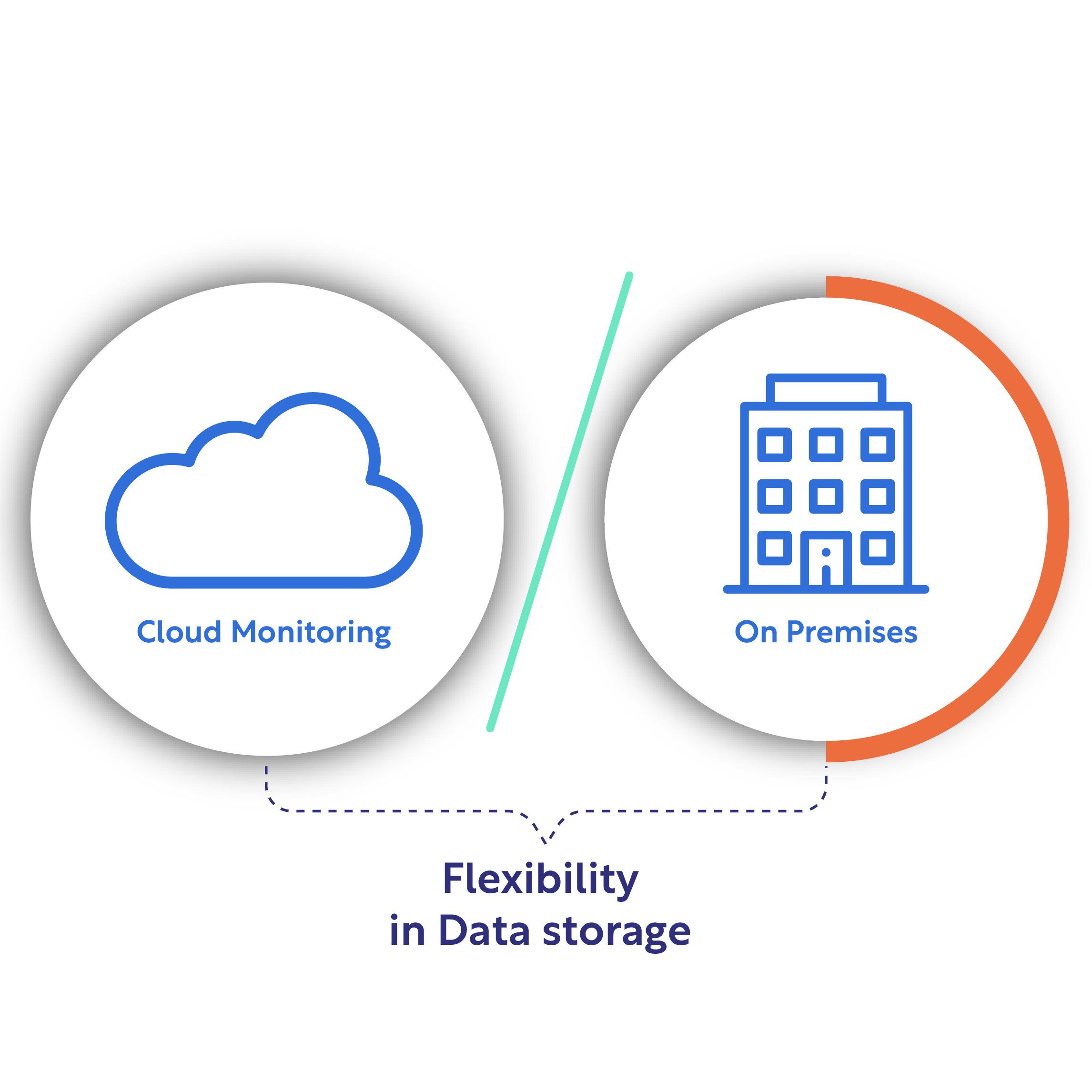
Organizations with strict data residency requirements maintain complete control with on-premises deployment, while multi-site operations benefit from cloud-based centralization. The choice is yours—the compliance capabilities remain identical.
Most monitoring systems tell you something went wrong after your shipment arrives. JRI’s GPS-enabled recorders show you problems while they’re happening, giving you time to intervene before product is lost.
This isn’t just tracking—it’s actionable intelligence that protects your products while they’re most vulnerable.

JRI’s Calibration Module brings ISO 17025 / COFRAC / NIST certified calibration capabilities directly into your facility. This isn’t a partnership with an external lab—it’s a complete, certified metrology system built natively into MySirius.
Instead of sending probes to an outside lab for weeks at a time (and paying premium prices for each calibration), you perform ISO-compliant calibrations in-house, on your schedule, with certificates generated automatically by the same platform that manages your monitoring.
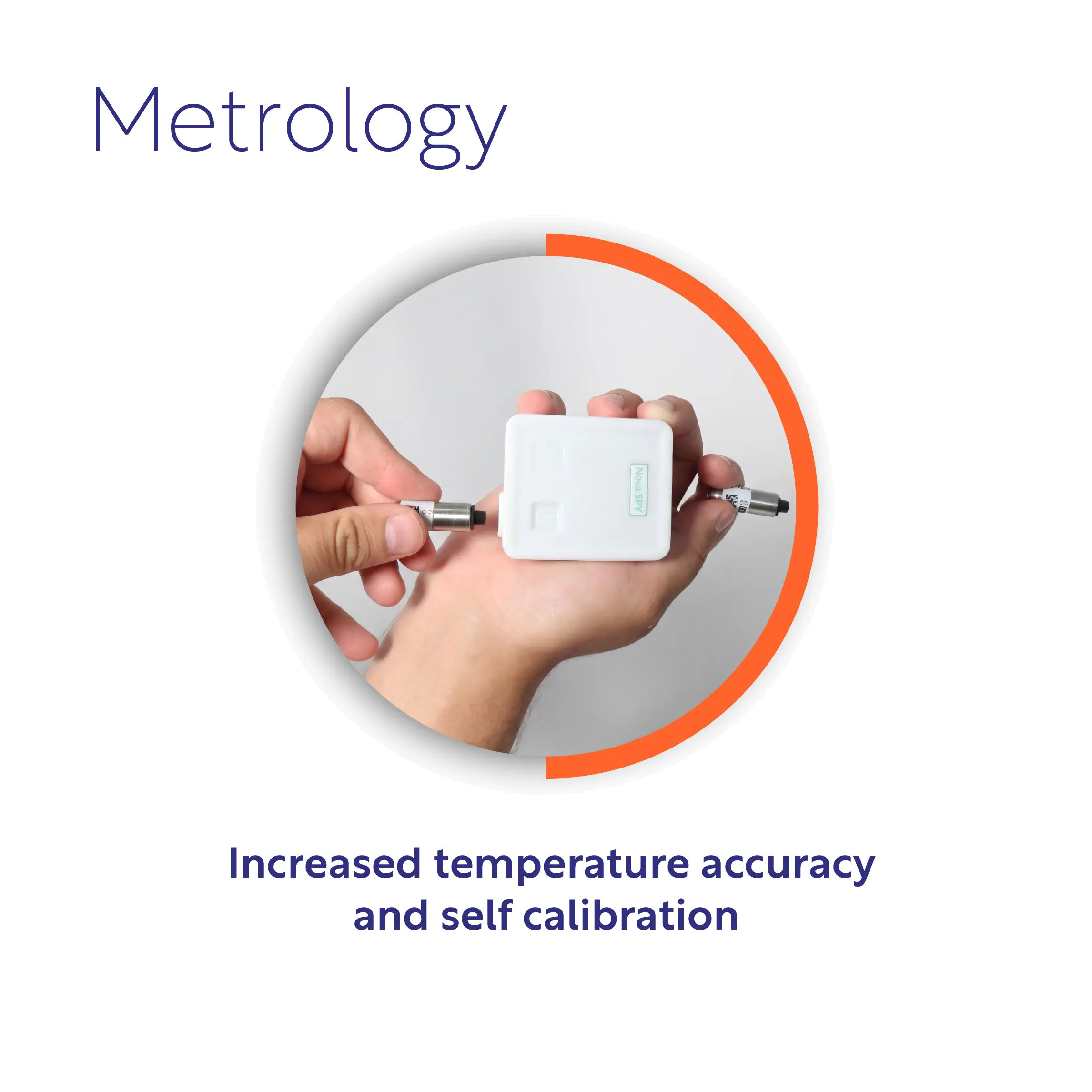
This capability transforms calibration from a costly, time-consuming compliance burden into a streamlined, in-house operation that actually strengthens your quality systems.
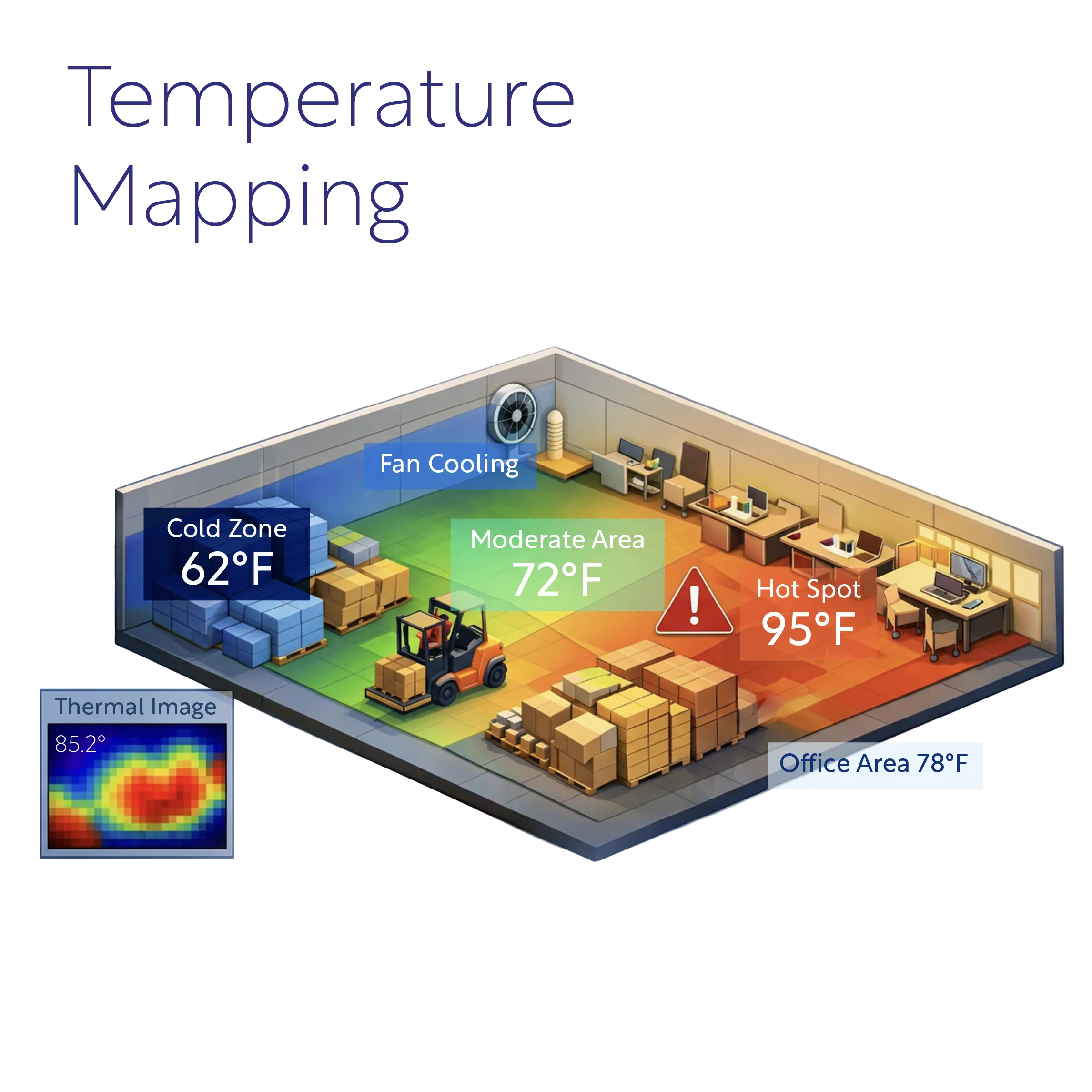
This isn’t a standalone mapping service that requires separate software, external consultants, or disconnected workflows. It’s a complete validation solution that integrates seamlessly with your existing monitoring infrastructure.
Instead of hiring third-party validation firms to perform temperature mapping studies (and waiting weeks for reports while paying premium consulting fees), you execute ISO-compliant mapping studies in-house, on your schedule, with automated reporting generated by the platform that already knows your facility inside and out.
This capability transforms temperature mapping from an expensive, periodic compliance exercise into a strategic quality tool that strengthens your understanding of environmental conditions and supports continuous improvement.
Compliance infrastructure requires more than software—it demands responsive expertise when you need it most. JRI maintains dedicated sales, service, support, deployment, and installation teams throughout North America, ensuring you receive local expertise backed by 180+ years of experience in metrology and monitoring.
Whether you’re validating a new cleanroom in California or troubleshooting an alert in Massachusetts, JRI’s North American presence ensures you’re never waiting for support from distant time zones. Our teams understand regional regulatory nuances and can coordinate multi-site deployments with precision.

Critical deviations demand immediate response, regardless of where your team is located. MySirius transforms smartphones into powerful alert systems, delivering real-time monitoring notifications through every communication channel your team uses.

Your compliance team shouldn’t be chained to desks to monitor critical environments. MySirius ensures the right people receive the right information at the right time, enabling faster response and better outcomes when conditions deviate from acceptable ranges.





More than 15,000 companies trust us for the quality of their measurements and our support.

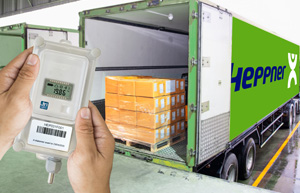
Modern pharmaceutical operations require monitoring across an unprecedented range of temperatures and environments. The WHO estimates that up to 50% of vaccines are wasted globally every year, largely due to temperature control issues. Each temperature range presents unique challenges that demand specialized monitoring approaches, and JRI’s comprehensive sensor portfolio with multiple connectivity options ensures reliable monitoring regardless of environmental constraints.
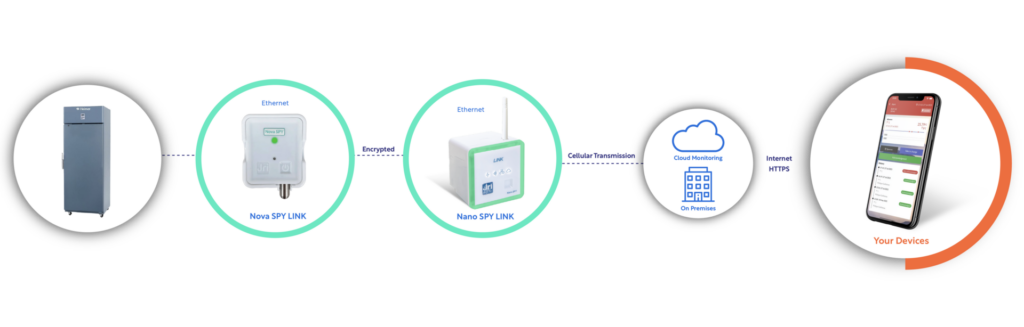
Our Nano SPY and Nova SPY wireless recorders have transformed cold chain monitoring with their extended battery life and small form factor that fits anywhere—from crowded laboratory freezers to packed shipping containers. For large warehouse environments where WiFi infrastructure is limited or non-existent, our LoRa SPY recorders leverage LoRaWAN technology to provide reliable coverage across vast spaces, penetrating walls and floors that block traditional wireless signals.
The real differentiator is how these hardware solutions integrate with MySirius’s intelligence layer. While basic data loggers provide simple data collection, MySirius transforms raw temperature data into actionable insights. Our platform identifies trends before they become excursions, correlates environmental factors affecting temperature stability, and provides predictive analytics that prevent product losses rather than simply documenting them.
Consider the challenge of monitoring CAR-T cell therapies during production and storage. With these personalized medicines costing $200,000 to $500,000 per dose according to ASCO guidelines, temperature deviations can result in devastating financial and patient impact losses. MySirius’s Core Temperature Modeling capability—unique in the industry—calculates actual product temperatures based on environmental conditions, providing assurance that surface temperature measurements alone simply cannot match.
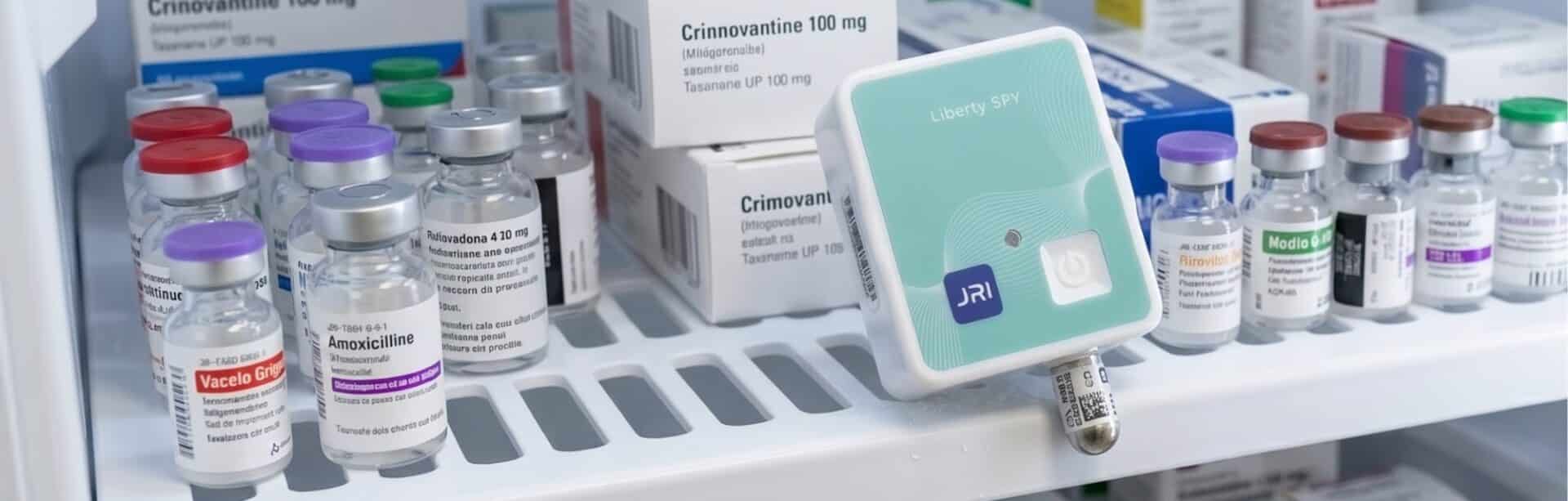
Cleanroom monitoring has long been a pain point for pharmaceutical manufacturers, with Pharmaceutical Engineering magazine reporting that 60% of facilities use three or more different monitoring systems for cleanroom parameters. JRI’s Cleanroom Module shatters this paradigm through universal Modbus connectivity that integrates with any existing equipment—particle counters, differential pressure monitors, or environmental sensors—regardless of manufacturer.
This approach delivers immediate value that other systems cannot match. Many monitoring platforms lack the comprehensive validation documentation and GxP-specific features that pharmaceutical cleanrooms require, or force customers into proprietary hardware ecosystems, creating vendor lock-in and limiting flexibility. Our pharmaceutical monitoring solution liberates pharmaceutical companies from these constraints, protecting existing investments while providing state-of-the-art monitoring capabilities.
The Cleanroom Module goes beyond simple data collection to provide intelligent correlation of environmental parameters. When particle counts spike, the system automatically correlates with differential pressure changes, personnel movement, and equipment operation to identify root causes. This multi-parameter analysis, combined with 21 CFR Part 11 compliant data management, creates a validated cleanroom monitoring solution that satisfies the most demanding regulatory inspections.Real-world implementations have demonstrated significant improvements in contamination investigation efficiency. According to PDA survey data, integrated environmental monitoring systems reduce investigation time by an average of 40-60% compared to standalone systems. This efficiency translates directly to reduced batch rejection rates and improved product quality metrics.
Calibration represents one of the most overlooked yet critical aspects of pharmaceutical temperature monitoring. Industry benchmarking studies show that pharmaceutical facilities spend an average of $100-200 per sensor annually on external calibration services. While many vendors offer mail-in calibration services that create monitoring gaps, JRI’s Calibration Module enables in-house ISO 17025/COFRAC/NIST calibration using the MySirius platform.
The Calibration Module works with both JRI metrology hardware and third-party equipment including Fluke calibrators, providing unmatched flexibility. While other systems lock customers into specific hardware ecosystems and service contracts, MySirius democratizes calibration, enabling pharmaceutical companies to maintain traceable calibration without operational disruptions or vendor dependencies.
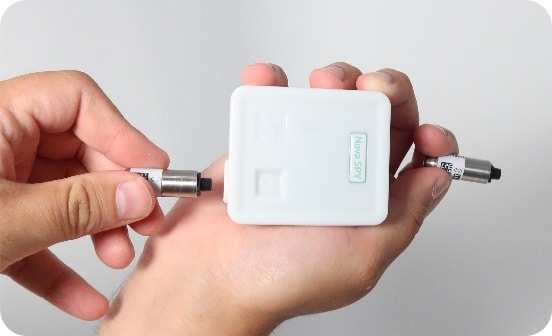
Consider the impact: a typical pharmaceutical facility with 500 temperature sensors faces significant annual external calibration costs, plus the operational complexity of managing temporary replacements during calibration cycles. The MySirius Calibration Module typically achieves return on investment within 12-18 months while improving calibration frequency and maintaining continuous monitoring coverage—advantages that directly impact product quality and compliance confidence.
The platform’s calibration workflows ensure consistency and compliance regardless of who performs the calibration. Automated certificate generation, equipment tracking, and scheduling eliminate the manual processes that introduce errors and compliance gaps. This systematization of calibration processes represents a maturity leap that distinguishes world-class pharmaceutical operations from those struggling with basic compliance.
Temperature mapping studies have evolved from periodic compliance activities to continuous improvement tools. According to ISPE Good Practice Guide recommendations, facilities should conduct mapping studies annually or after significant changes. JRI’s Temperature Mapping Module within MySirius transforms these studies from labor-intensive projects to streamlined workflows that deliver immediate operational value.
The module’s automated study protocols eliminate the manual data collection and analysis that consume weeks of validation team time. Real-time data visualization during mapping studies enables immediate identification of problem areas, allowing corrective actions during the study rather than after lengthy analysis. Industry case studies demonstrate that automated mapping systems reduce study duration by 40-60% compared to manual approaches while improving data quality and coverage.
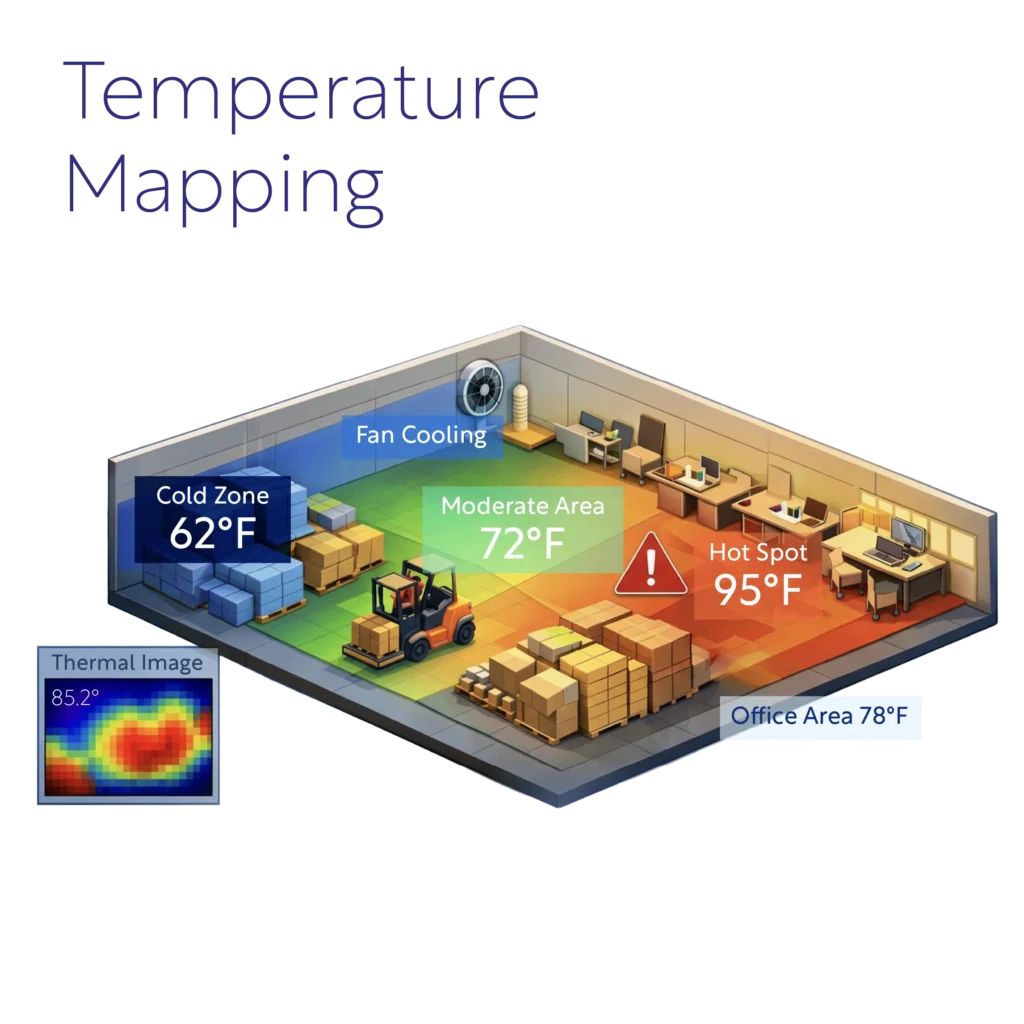
Three-dimensional thermal modeling within MySirius reveals temperature dynamics that traditional mapping reports miss. By visualizing how temperature gradients shift with loading patterns, seasonal variations, and HVAC cycles, pharmaceutical companies optimize both sensor placement and storage strategies. The Department of Energy reports that optimized HVAC operations in pharmaceutical facilities can reduce energy consumption by 10-30%—savings that extend far beyond compliance benefits.
The integration between mapping and continuous monitoring creates perpetual validation confidence. Rather than wondering if conditions have changed since the last mapping study, MySirius continuously validates that actual conditions match qualified parameters. This proactive validation approach aligns with FDA’s Quality by Design (QbD) principles and current regulatory expectations for continuous process verification.
The Mobility Module represents JRI’s answer to the complex challenge of maintaining temperature compliance for mobile pharmaceutical assets. The Parenteral Drug Association (PDA) Technical Report 39 emphasizes that temperature excursions during transport represent one of the highest risks to product quality. While traditional solutions focus primarily on shipment tracking, the Mobility Module provides comprehensive monitoring for any mobile asset—from nitrogen dewars moving between buildings to mobile vaccine clinics serving remote communities.
This capability addresses a critical blind spot in traditional monitoring strategies. When temperature-sensitive products leave fixed storage locations, many monitoring systems lose visibility. The Mobility Module maintains continuous wireless monitoring and real-time location tracking, ensuring complete temperature documentation regardless of asset movement. The system’s geo-fencing capabilities automatically document when products enter or leave defined areas, creating chain-of-custody documentation that satisfies the most stringent distribution requirements.
For hospital pharmacies managing medication delivery robots or mobile chemotherapy preparation units, the Mobility Module provides unprecedented visibility and control. Real-time alerts ensure immediate response to temperature deviations, while historical tracking enables route optimization and risk assessment. This isn’t just tracking—it’s active temperature management for mobile operations.
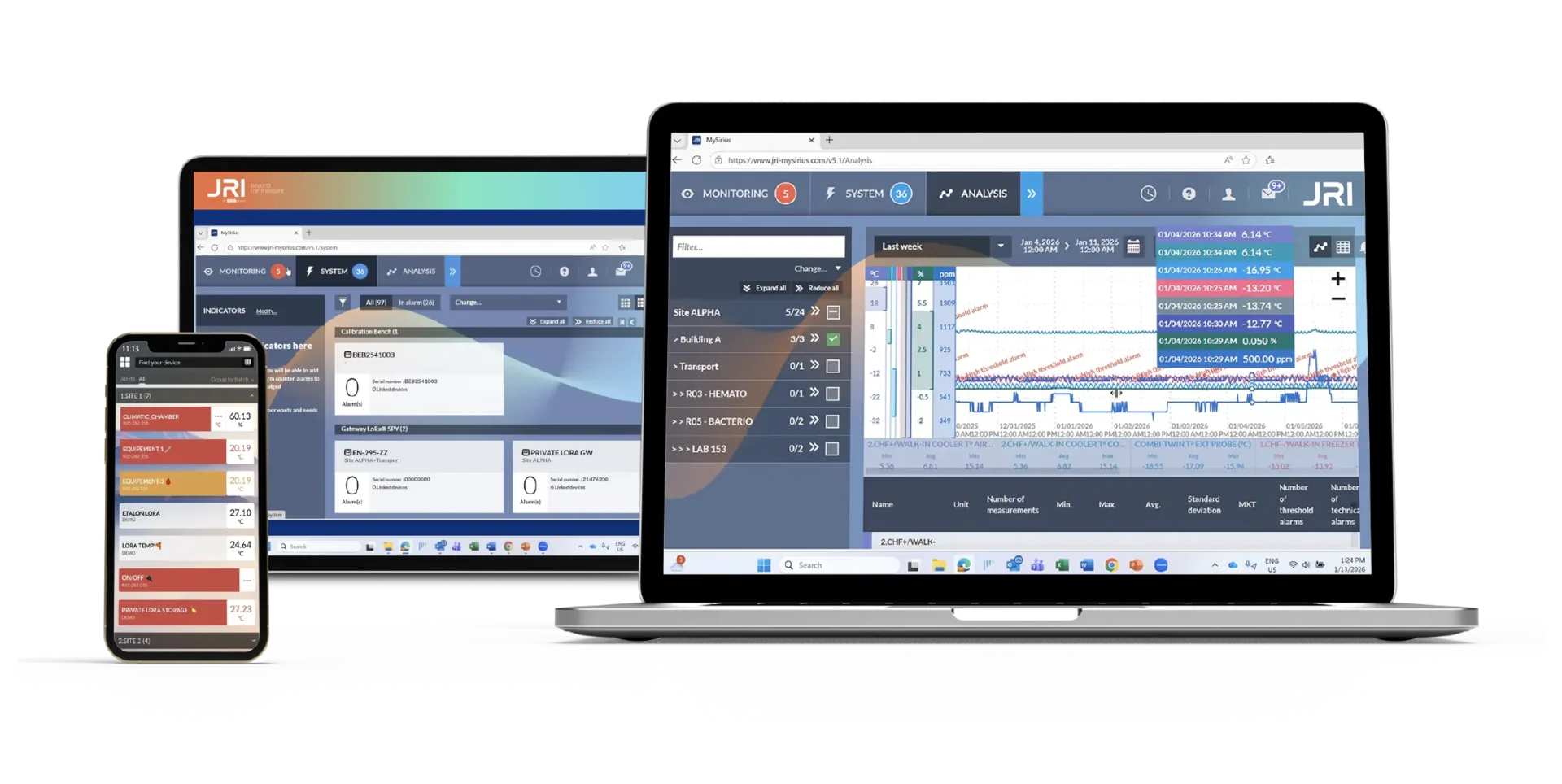
The future of pharmaceutical temperature monitoring lies not in collecting more data, but in deriving actionable intelligence from existing information. McKinsey’s pharmaceutical operations report indicates that predictive analytics can reduce quality incidents by 20-30% in pharmaceutical manufacturing. MySirius’s advanced analytics engine identifies patterns and correlations that human analysis would never detect.
Our Core Temperature Modeling capability exemplifies this intelligence advantage. Research published in the Journal of Pharmaceutical Sciences demonstrates that product core temperatures can differ from surface measurements by 2-5°C during temperature transitions. While traditional systems measure air or surface temperatures and hope they reflect product conditions, MySirius calculates actual product core temperatures using advanced thermodynamic models validated against empirical data.
Machine learning algorithms within MySirius continuously improve prediction accuracy based on facility-specific patterns. The system learns how your specific equipment behaves, how seasonal variations affect different storage areas, and which alarm patterns indicate genuine risks versus transient conditions. Studies from the International Society of Automation show that intelligent alarm management can reduce false alarms by up to 70% while maintaining or improving detection of genuine events.
The platform’s reporting engine transforms this intelligence into actionable insights for different stakeholders. Quality receives compliance-focused reports, maintenance gets predictive failure analysis, and management sees operational efficiency metrics. This multi-perspective reporting ensures everyone has the information needed to optimize their portion of the temperature control chain.
JRI’s longevity in metrology and monitoring has taught us that technology alone doesn’t ensure success—implementation strategy determines outcomes. Research by the International Society for Pharmaceutical Engineering (ISPE) shows that 40% of monitoring system implementations fail to achieve expected benefits due to poor deployment strategies. Our proven methodology, refined across thousands of pharmaceutical installations, ensures rapid time-to-value while maintaining validation rigor.
Start with risk-based deployment prioritization. ICH Q9 Quality Risk Management principles recommend focusing resources on highest-risk areas. Rather than attempting enterprise-wide implementation, concentrate initial deployment on critical zones—typically cleanrooms, stability chambers, and cold storage. This approach delivers immediate risk reduction while building organizational confidence and expertise.
Sensor placement strategy significantly impacts monitoring effectiveness and operational efficiency. USP <1079> guidelines provide minimum requirements, but optimal placement requires considering operational workflows, maintenance access, and risk assessment results. Our temperature mapping data drives sensor positioning that balances comprehensive coverage with practical maintenance considerations.
Change management remains the most underestimated implementation challenge. Harvard Business Review research indicates that 70% of change programs fail due to employee resistance. That’s why our implementation and support services emphasize stakeholder engagement, role-specific training, and clear communication of benefits beyond compliance. When warehouse staff understand how MySirius prevents weekend emergency calls, adoption accelerates dramatically.
As we look toward the remainder of 2026 and beyond, pharmaceutical temperature monitoring will continue evolving with new regulations, emerging therapies, and advancing technologies. The FDA’s Emerging Technology Program highlights continuous manufacturing, personalized medicines, and advanced therapy medicinal products as areas requiring enhanced environmental monitoring capabilities.
Upcoming MySirius capabilities include blockchain integration for immutable supply chain records, augmented reality interfaces for maintenance procedures, and expanded AI capabilities for autonomous monitoring optimization. These developments align with the FDA’s Technology Modernization Action Plan and the industry’s digital transformation initiatives.
The platform’s open architecture ensures integration with emerging technologies and industry systems. Whether connecting to new ERP platforms, integrating with quality management systems, or adapting to new regulatory reporting requirements, MySirius provides the flexibility that proprietary systems cannot match. This openness protects against vendor lock-in while ensuring compatibility with your broader digital transformation initiatives.
Selecting a pharmaceutical temperature monitoring system in 2026 requires looking beyond basic compliance to consider total operational impact. Legacy vendors offer point solutions that address specific requirements but create integration challenges and data silos. Traditional validation-focused tools excel in narrow applications but lack comprehensive monitoring capabilities.
JRI’s MySirius platform delivers the complete solution that modern pharmaceutical operations demand. From our revolutionary Cleanroom Module that eliminates hardware replacement to our Calibration Module that brings ISO 17025 capabilities in-house, every aspect of MySirius reflects deep pharmaceutical industry expertise combined with innovative engineering.
Industry benchmarking studies consistently show that integrated monitoring platforms reduce total cost of ownership by 30-50% compared to multiple point solutions when considering hardware, validation, training, and operational costs. Customers implementing MySirius typically report significant operational cost reductions through automation, integration, and predictive capabilities. When factoring in prevented product losses, optimized energy consumption, and reduced validation costs, return on investment typically occurs within 12-18 months.
More importantly, MySirius provides the confidence that comes from comprehensive, integrated monitoring. When regulators arrive for inspections, when new products require specialized storage, or when supply chains face disruption, MySirius ensures you’re prepared. This confidence—backed by 180+ years of metrology expertise and proven global pharmaceutical deployments—makes JRI the strategic choice for pharmaceutical temperature monitoring.
The pharmaceutical temperature monitoring landscape of 2026 demands more than incremental improvements to legacy approaches. It requires fundamental reimagination of how monitoring systems support quality, compliance, and operational excellence. JRI’s MySirius platform delivers this transformation through innovative modules, comprehensive integration, and intelligence that transforms data into actionable insights.
From cleanroom particle counting to cold chain logistics, from in-house calibration to predictive analytics, MySirius addresses every aspect of pharmaceutical environmental monitoring within a single, validated platform. While competitors force pharmaceutical companies to juggle multiple systems and vendors, JRI provides the unified solution that modern pharmaceutical operations require.
The choice is clear: continue struggling with disconnected legacy systems that create compliance risks and operational inefficiencies, or embrace MySirius’s comprehensive capabilities that position your organization for sustained success. With regulatory requirements intensifying, product values increasing, and patient expectations rising, can you afford anything less than the industry’s most advanced monitoring platform?
Contact JRI today to discover how we can transform your pharmaceutical temperature monitoring from a compliance burden into a strategic advantage.
Most monitoring platforms require pharmaceutical companies to integrate multiple point solutions—one for cleanrooms, another for cold chain, a third for calibration management. MySirius consolidates all of these into a single validated platform with unified data, audit trails, and reporting. This eliminates the compliance gaps and data silos that occur when systems don’t communicate with each other.
Yes. MySirius was designed from the ground up for regulatory compliance rather than retrofitted. It provides full ALCOA+ audit trails, role-based access controls, electronic signatures, and time-stamped logging that satisfy both FDA 21 CFR Part 11 and EU Annex 11 requirements. The platform also aligns with GMP, GxP, ISO 27001, and PIC/S harmonized guidelines.
Traditional monitoring systems measure ambient air or surface temperatures and assume they reflect the actual temperature of the product inside. Research shows that product core temperatures can differ from surface readings by 2–5°C during temperature transitions. MySirius’s Core Temperature Modeling uses validated thermodynamic algorithms to calculate actual product core temperatures based on environmental conditions—providing genuine product safety assurance rather than a proxy measurement. This is particularly critical for high-value biologics, vaccines, and CAR-T therapies.
No hardware replacement is required. The Cleanroom Module connects to existing equipment—particle counters, differential pressure monitors, environmental sensors—from any manufacturer via universal Modbus connectivity. This protects your existing infrastructure investment while immediately extending it with MySirius’s monitoring intelligence and compliance reporting.
MySirius supports multiple wireless technologies to suit different environments. Nano SPY and Nova SPY sensors connect via Bluetooth and standard WiFi for laboratory and controlled storage settings. LoRa SPY sensors use LoRaWAN technology, which penetrates walls, floors, and dense infrastructure to cover large warehouse environments where WiFi is impractical. The Mobility Module adds GPS/GPRS tracking for assets in transport. All sensor data flows into the same MySirius platform regardless of connectivity type.
Implementation timelines vary based on facility size and scope, but JRI’s risk-based methodology is designed to deliver value quickly. The recommended approach focuses initial deployment on highest-risk zones—cleanrooms, stability chambers, cold storage—before expanding. This phased strategy reduces risk immediately while building team confidence. JRI provides full installation, commissioning, qualification support, and ongoing metrological services, so customers are never left to figure out deployment on their own.
Facilities that bring calibration in-house using the MySirius Calibration Module typically achieve ROI within 12–18 months. The savings come from eliminating external calibration service fees (industry benchmarks put these at $100–200 per sensor annually), reducing monitoring gaps caused by mail-in calibration cycles, and automating certificate generation and equipment scheduling. The module works with JRI metrology hardware as well as third-party calibrators, so existing equipment doesn’t need to be replaced.
The Mobility Module extends MySirius monitoring to any mobile asset—delivery vehicles, shipping containers, nitrogen dewars, mobile pharmacy units. It provides real-time GPS geolocation alongside continuous temperature and humidity monitoring, with geo-fencing alerts that automatically document when products enter or leave defined areas. If connectivity is unavailable, sensors store up to 20,000 measurements locally and sync when a connection is restored, ensuring there are no gaps in the chain-of-custody record.
Yes. The Temperature Mapping (Characterization) Module provides a complete environment for planning, executing, and documenting thermal mapping campaigns for any type of enclosure—freezers, incubators, cold rooms, warehouses, sterilization tunnels. The module automates data collection, generates real-time dashboards during studies (showing deviations, stability, and gradients as they happen), and produces audit-ready PDF reports compliant with WHO, ICH Q10, and GxP guidelines. Automated mapping studies typically run 40–60% faster than manual approaches.