A 2022 PMC simulation study on vaccine temperature monitoring found that non-continuous (manual) monitoring practices can miss significant temperature excursion events, and that min/max temperature readings add substantial value over relying solely on spot-check current temperature readings, particularly when excursions occur between manual checks. That gap between checks is where biologics and vaccines are most vulnerable, yet it’s also where most cold chain programs go blind.
The problem isn’t that temperature control is hard. The problem is that transport creates a visibility gap that manual monitoring can’t close. Between depot and clinic, between airport and hospital, your vaccines are moving through environments you can’t see into. When you rely on spot checks at handoff points, you’re essentially hoping nothing went wrong in between. That’s not a compliance strategy. That’s a gamble.
The industry has spent decades perfecting storage monitoring. Walk into any pharmaceutical facility and you’ll find calibrated sensors, automated alerts, and meticulously logged data. But the moment a shipment leaves that controlled environment, most organizations revert to periodic thermometer readings and trust. The technology to close that gap exists. The question is whether your organization is using it.
Why Manual Temperature Checks Fail When Vaccines Are Moving
Manual monitoring works in static environments because the conditions are predictable and the asset stays in one place. Transport breaks both assumptions. A vaccine shipment might sit on a loading dock in direct sunlight, ride in a truck with inconsistent refrigeration, or wait at a transfer point while the next vehicle is delayed. Every one of those moments is a potential excursion, and manual checks won’t catch them unless they happen to coincide with a handoff.
The simulation research makes this concrete: excursions that occur between manual checks simply disappear from your records. You see a compliant temperature at departure and a compliant temperature at arrival, so you assume the journey was fine. But if the shipment spent 40 minutes outside the acceptable range during a midday transfer, you have no way to know. The product might still look fine. The packaging might show no visible damage. But the potency could be compromised, and you won’t discover it until a patient reports a treatment failure or a batch fails post-transport testing.
This isn’t a theoretical risk. It’s a daily operational reality in vaccine distribution. The longer the transport chain, the more handoffs, the more opportunities for invisible excursions. Manual monitoring gives you snapshots. What you need is a continuous record.
The Technology Gap: What 91% of Healthcare Workers Are Missing
In a vaccine cold chain temperature monitoring study conducted in Mexico (published 2020), 91% of healthcare staff reported that they did not have the necessary tools to detect whether a vaccine had been damaged by a temperature excursion outside the recommended 2–8 °C range. That’s not a training problem. That’s an infrastructure problem. When the people responsible for vaccine integrity don’t have the tools to verify it, the entire cold chain becomes a trust exercise.
The gap isn’t just about hardware. It’s about the absence of a system that connects temperature data to decision-making in real time. Healthcare workers receive shipments, check the thermometer, and make a judgment call based on incomplete information. If the current temperature looks acceptable, they assume the product is viable. If it doesn’t, they might quarantine the batch and wait for guidance. But without a continuous temperature history, they’re guessing.
This creates compounding risk. A shipment that experienced a brief excursion during transport might pass the arrival check but still carry compromised product. That product then moves into inventory, gets distributed to clinics, and eventually reaches patients. By the time anyone realizes there’s a problem, the damage is done. The cost isn’t just the wasted product. It’s the lost trust, the regulatory scrutiny, and the patients who didn’t get the protection they needed.
Pharmaceutical temperature monitoring systems exist to solve this, but adoption remains uneven. Organizations that treat transport monitoring as optional are effectively accepting that some percentage of their shipments will arrive with unknown integrity. That might be tolerable for low-value products. For biologics and vaccines, it’s not.
Continuous Monitoring as the Foundation of Vaccine Integrity
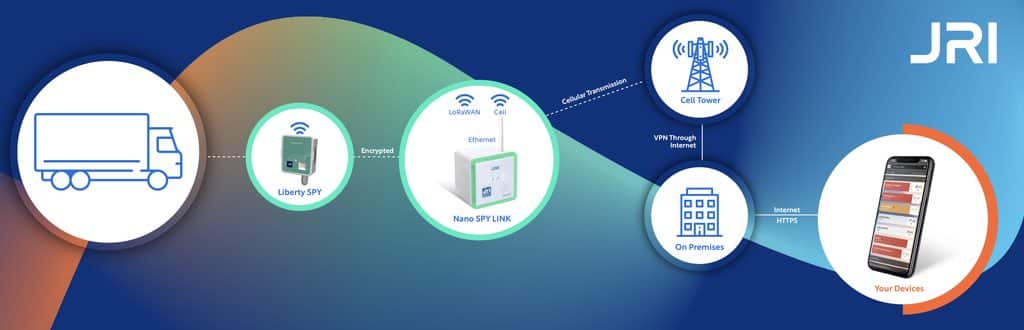
The shift from manual checks to continuous monitoring isn’t about adding more data. It’s about making transport transparent. When every shipment carries a wireless sensor that logs temperature and location throughout the journey, you eliminate the blind spots. You know not just where the product is, but what conditions it’s experiencing in real time.
Real-time temperature monitoring transforms how organizations respond to excursions. Instead of discovering a problem at the receiving dock, you get an alert the moment a shipment moves out of range. That gives you options: reroute the shipment, expedite the transfer, or quarantine the product before it enters inventory. The faster you know, the more control you have.
The Biosite case study demonstrates how this works in practice. Biosite, a medical analysis laboratory in France, needed reliable traceability for biological samples moving between collection points and analysis labs. They deployed JRI’s MySirius Mobility solution with Nano SPY recorders and SPY LINK communication modules. The system gives technicians immediate visual warnings when an alarm is active, and the MySirius platform centralizes all temperature data and traceability records in one interface. Benoit Lancelin, Pharmacien Biologiste at Biosite, noted, “We quickly found our feet in the JRI-MySirius application because it shares several similarities with the Labguard software. It is intuitive to use, and more of our technicians are connecting to it.”
The operational impact is straightforward: when your team can see temperature history for every shipment, they stop making decisions based on assumptions. They have the data to prove compliance, identify patterns, and improve processes. That’s the difference between hoping your cold chain works and knowing it does.
Building a Transport System That Protects Every Dose
A functional transport monitoring system has three components: sensors that capture data continuously, connectivity that transmits it in real time, and a platform that turns it into actionable intelligence. The sensors need to be small enough to travel with individual shipments, accurate enough to meet regulatory standards, and robust enough to survive the physical demands of transport. The connectivity needs to work across geographies and handoffs, so you don’t lose visibility when a shipment moves between carriers or crosses borders. The platform needs to centralize data from all shipments, flag excursions automatically, and provide audit-ready documentation.
JRI’s Mobility Module addresses all three. Wireless asset tracking combines temperature and condition monitoring with real-time location data, so you always know where your shipments are and what’s happening to them. The system supports geo-fencing, so you can set alerts when a shipment enters or leaves a defined area. Movement history gives you a complete audit trail, and mobile alerting ensures the right people get notified immediately when something goes wrong.
The goal isn’t to eliminate every excursion. The goal is to know about them when they happen so you can respond before the product reaches a patient. That requires infrastructure, not just policy. Organizations that treat monitoring as a compliance checkbox rather than a core operational capability are leaving gaps in their cold chain. Those gaps cost money, waste products, and put patients at risk.
The technology to close those gaps exists today. The question is whether your organization is ready to deploy it. If 91% of healthcare workers don’t have the tools to verify vaccine integrity, that’s not a workforce problem. That’s a systems problem. And systems problems have systems solutions.
JRI has spent decades building monitoring infrastructure for regulated environments. We understand that transport is where cold chains break, and we’ve designed solutions that keep them intact. If your organization is ready to move beyond manual checks and trust-based logistics, we can help you build a transport system that protects every dose. Learn more about our temperature tracking solutions for shipping or explore how our Mobility Module can give you end-to-end visibility across your cold chain.